


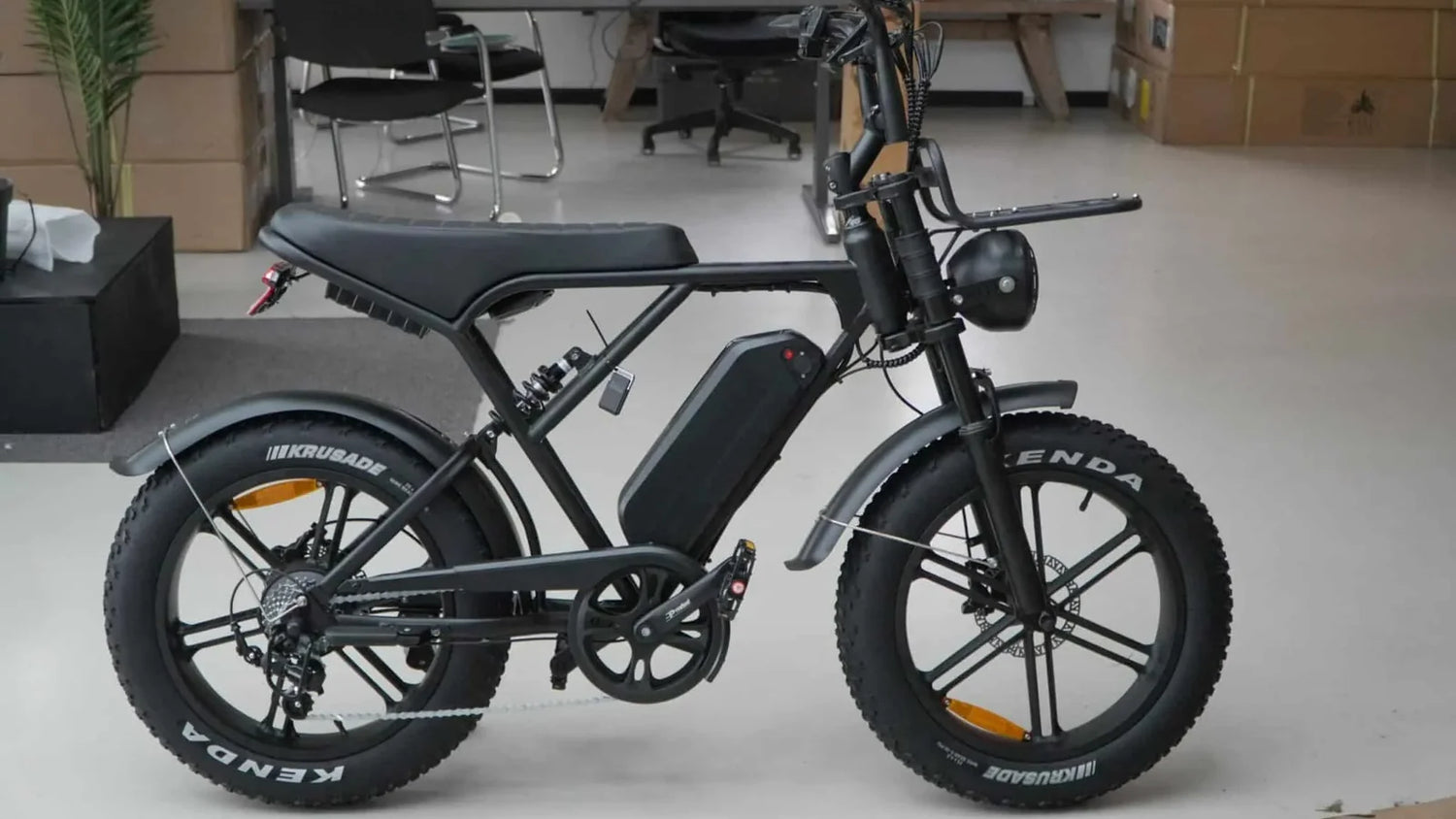
You recognize a fatbike by the extra wide tires. Where a regular bike has tires a few centimeters wide, a fatbike rides on tires 3.8 to 5 inches wide, about 10 to 13 cm. Those thick, low-pressure tires provide lots of grip and a stable, soft ride, even on surfaces where a narrow tire sinks in.
In the Netherlands, most people just ride such a bike through the city, to work or school. If you want to see which models are available right away, check out our fatbike collection. Below you’ll read how to recognize a fatbike, what to look for, and whether it’s legal.
How do you recognize a fatbike?
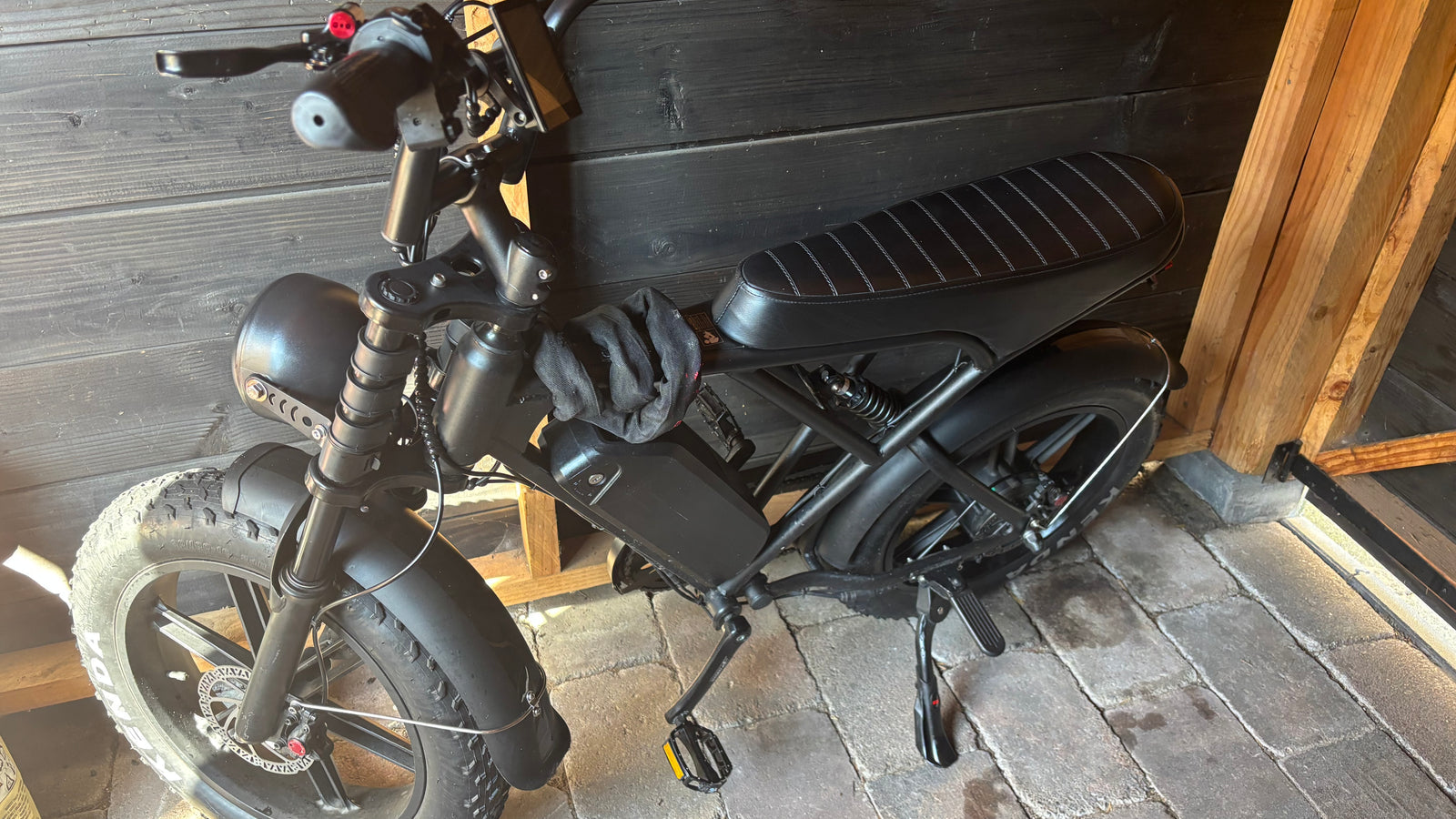
The wide tires are the clearest feature, with 20 inches being the most common. They run at low pressure, often around 0.5 bar, making the contact area with the ground large. This provides grip and cushions bumps without needing expensive suspension. The frame is sturdier than a regular city bike because it has to support those wide tires and extra weight.
Because of the large contact area, you distribute your weight over more surface and sink less easily. You notice this most on sand, snow, and mud: where a regular bike gets stuck, you still roll over it. For most people, comfort and grip in daily traffic matter most, not so much mountains or the beach. A fatbike is usually also an e-bike, with pedal assistance that compensates for the extra weight.
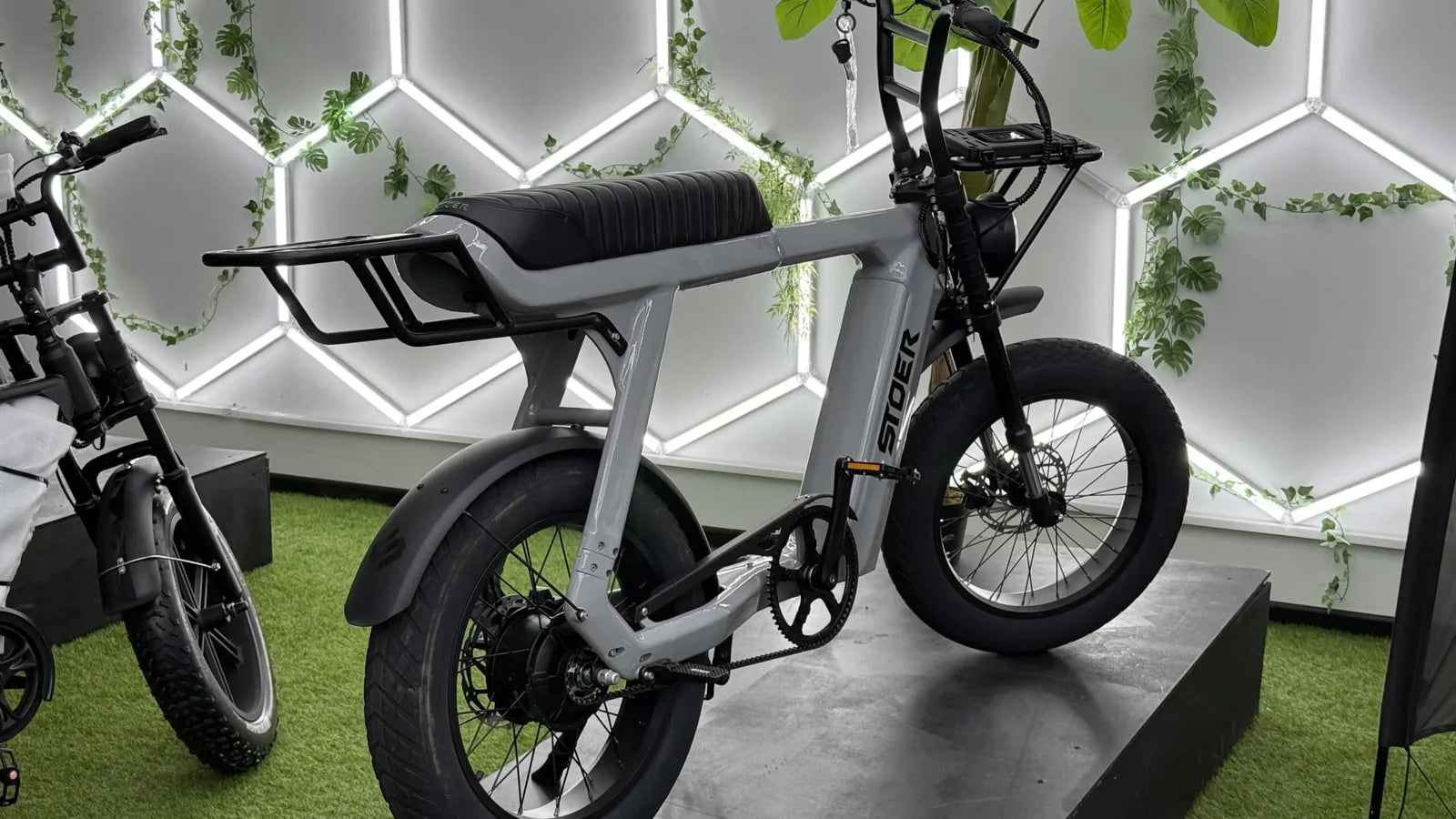
The difference with a regular e-bike or mountain bike is in the tires: much wider, more grip and comfort, but also more weight and rolling resistance. On smooth asphalt, you pedal harder and the battery drains faster. If you want something narrower and sportier, skinnybikes are an option. If you’re heavier and want mainly comfort, read our explanation about fatbikes for heavier riders.
Is a fatbike legal and how fast does it go?
If the fatbike is a regular e-bike, with a 250-watt motor and pedal assistance up to 25 km/h, it counts as a regular bike. You don’t need a license, registration, or insurance, and there’s no helmet requirement. You ride it like any other bike, simply on the bike path.
It’s different if a model goes faster or has a real throttle. A throttle is only allowed as a starting aid up to 6 km/h. If it pulls beyond that without pedaling, or the motor supports above 25 km/h, it’s no longer a regular bike, and registration, insurance, and sometimes a license are required. Pay attention to this when buying, as it varies by model.
Read more: What is a pedelec? · How fast can an e-bike go? · E-bike range · How much does a fatbike cost? · Fatbike for heavier riders
View directly: fatbike collection · offers · skinnybikes

Leave a comment
This site is protected by hCaptcha and the hCaptcha Privacy Policy and Terms of Service apply.